Basement Waterproofing in Lewiston-Auburn for Leaks, Moisture, and Mold Prevention

Mattra helps Lewiston-Auburn homeowners stop basement leaks, control moisture, and reduce the risk of mold and future water damage.

Clear Guidance Practical Next Steps No Pressure

Not Sure Why Your Basement Is Wet?

A wet basement can come from more than one source. Some homes have seepage through foundation walls. Others deal with basement leaks, damp corners, musty air, poor drainage, or humidity that never fully goes away. In many cases, the moisture problem is bigger than it first appears.

That is why Mattra starts by helping you understand what is actually causing the issue. Basement waterproofing works best when it is tied to the real source of the moisture, whether that is water intrusion, foundation moisture issues, humidity buildup, or a connected mold risk.

Start with the Diagnostic Form to explain what you are seeing and get clearer direction on the right next step.

Clear guidance, practical next steps, no pressure

What Causes a Wet Basement and Why Waterproofing Matters

Basement moisture problems usually do not happen for just one reason. Water can move through the foundation, enter around weak points, build up from poor drainage, or linger in the air as humidity. That is why wet basement problems often come back when people only treat the symptom instead of the source.

Common causes of a wet basement include:

  • Foundation seepage
  • Poor grading around the home
  • Hydrostatic pressure pushing moisture inward
  • Cracks or weak points in walls or floors
  • Drainage problems outside the home
  • Basement humidity problems that keep the space damp
  • Long-term moisture buildup that affects air quality and materials

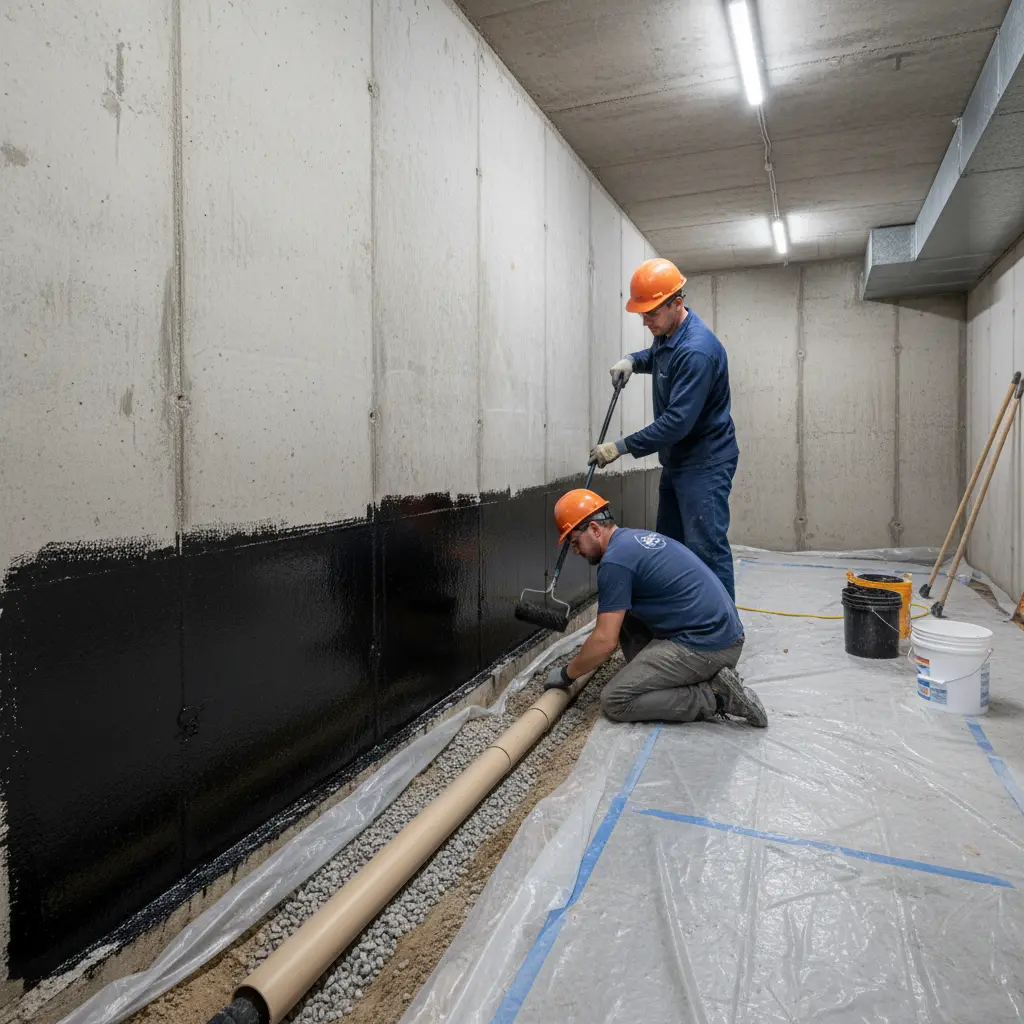
Basement waterproofing matters because it helps stop basement leaks, reduce recurring moisture problems, and create longer-lasting protection instead of short-term patching.
Basement moisture diagram showing seepage, wall pressure, drainage issues, and damp air buildup

How Basement Insulation, Dehumidification, and Crawl Space Conditions Affect the Basement

Basements do not operate in isolation. Lower-level moisture often connects to other parts of the home, which is why whole-home thinking matters.

Basement Insulation

  • Insulation can help or hurt depending on moisture management
  • Proper vapor barriers are essential
  • Moisture-resistant materials perform best below grade
  • Connects directly to waterproofing performance

Basement Insulation

Insulation can help or hurt depending on how moisture is being managed in the space. When waterproofing and insulation work together, the basement performs better long term.

Basement Insulation →

Dehumidification

  • High humidity may persist even without standing water
  • Reduces conditions that support mold growth
  • Improves air quality in lower-level spaces
  • Works alongside waterproofing for better results

Dehumidification

High humidity may call for better moisture control even when there is no obvious standing water. Dehumidification helps manage the air quality and dampness that waterproofing alone may not fully resolve.

Dehumidification →

Crawl Space Conditions

  • Connected lower-level spaces affect basement dampness
  • Air movement between crawl space and basement
  • Moisture behavior across the lower level
  • Encapsulation can reduce overall moisture load

Crawl Space Conditions

Connected lower-level spaces can affect basement dampness, air movement, and moisture behavior. Addressing crawl space conditions alongside waterproofing creates a more complete solution.

Crawl Space Encapsulation →

Air Movement and Musty Conditions

  • Moisture and odors can spread through the home
  • Unresolved lower-level conditions affect upper floors
  • Stack effect pulls damp air upward
  • Whole-home approach prevents recurring issues

Air Movement and Musty Conditions

Moisture and odors can spread through the home when lower-level conditions stay unresolved. Addressing the source in the basement helps improve conditions throughout the entire house.

Mattra helps connect waterproofing to these related services so the solution makes more sense long term.

Basement Waterproofing and Leak Repair for Long-Term Protection

Basement waterproofing is about more than keeping water off the floor. It is about managing how moisture enters, moves through, and lingers in the lower level of the home.

Basement Waterproofing

Long-term moisture protection that helps reduce recurring wet basement problems.

Basement Leak Repair

Targeted repair when water is entering through cracks, joints, or weak points.

Wet Basement Repair

Support when surfaces or materials are already showing signs of water damage.

Foundation Waterproofing Support

Helpful when basement moisture is tied to the building envelope and below-grade conditions.

Practical Next-Step Planning

Useful when the source is not obvious yet and the first step needs to be clarified.

For homeowners dealing with damp basement walls, basement seepage, or recurring water intrusion, the goal is to correct the problem in a way that supports the whole home, not just one corner of it.

How Waterproofing Helps Prevent Mold, Odors, and Water Damage

A wet basement is not just an inconvenience. Moisture below the main living space can affect indoor air, create musty odors, and increase the risk of mold and long-term material damage.

That is why waterproofing and mold prevention go hand in hand. When basement moisture stays unresolved, it can contribute to:

  • Musty air moving into upper living spaces
  • Mold growth on materials or hidden surfaces
  • Damage to framing, drywall, insulation, and finishes
  • Poorer air quality throughout the home
  • Moisture-related damage that becomes more expensive over time

Waterproofing helps reduce those risks by lowering the conditions mold needs to grow. If your basement already shows signs of contamination or persistent dampness, it may also make sense to explore related mold support.

Cause-and-effect of basement moisture connecting to odor, mold risk, and material damage

When Water Damage Repair or Construction Work Is Part of the Solution

1

Stop the Moisture Source

Waterproofing starts by addressing how and where moisture is entering the basement.

2

Assess What Was Affected

If the basement has already been wet for a while, surrounding materials may also need repair.

3

Connect Waterproofing to Restoration

Once the moisture source is addressed, damaged materials can be repaired with a stronger long-term plan.

4

Build the Next Step Around the Whole Home

Some basements need waterproofing only. Others need waterproofing plus water damage repair or broader construction support.

Sometimes waterproofing solves the moisture problem before major damage happens. Other times, a wet basement has already affected materials that now need repair.

That may include:

  • Damaged drywall or lower wall sections
  • Flooring affected by repeated moisture
  • Wood rot or framing damage
  • Areas that were opened during moisture investigation
  • Repairs needed after long-term seepage or a major water event

Get the Basement Moisture Warning Signs Checklist

Not every moisture issue starts with standing water. Some basements show early warning signs first, like musty air, staining, peeling finishes, or damp walls.

The Basement Moisture Warning Signs Checklist can help you spot:

  • Early signs of basement seepage
  • Conditions that may lead to mold or damage
  • Clues that moisture is entering from outside or building up inside
  • Questions to ask before the problem gets worse

A practical resource for spotting moisture problems before they become more expensive.

Basement moisture warning signs checklist for Lewiston-Auburn homeowners

Related Services for Basement Moisture and Whole-Home Protection

Mold Removal and Remediation

If basement moisture has already led to musty odors, visible growth, or contamination concerns, explore mold removal and remediation.

Removal & Remediation →

Basement Insulation

If comfort and moisture control overlap in the lower level, learn more about basement insulation.

Basement Insulation →

Crawl Space Encapsulation

If the home has connected lower-level moisture issues, see crawl space solutions.

Crawl Space Encapsulation →

Dehumidification

If the air in the basement stays damp even without visible leaks, review dehumidification services.

Dehumidification →

Water Damage Repair

If materials have already been affected by water intrusion, get help with water damage repair.

Water Damage Repair →

Why Lewiston-Auburn Homeowners Choose Mattra for Basement Waterproofing

Mattra approaches basement waterproofing with a whole-home mindset, not just a product-first pitch. That means we look at moisture sources, foundation conditions, mold risk, and long-term protection before recommending the right path.

  • Local Lewiston-Auburn waterproofing experience
  • Whole-home moisture assessment
  • Fully licensed and insured in Maine
  • Mold prevention built into the approach
  • Free in-home assessments
  • Connected services for insulation, dehumidification, and construction

If you are already dealing with moisture or mold alongside your waterproofing concerns, it is important to address those issues before or alongside the waterproofing work.

Common Questions About Basement Waterproofing

A wet basement can be caused by foundation seepage, poor drainage, hydrostatic pressure, cracks, humidity, or other moisture problems that let water build up or move into the space.

Basement waterproofing helps reduce or stop moisture intrusion, control damp conditions, and support long-term protection against leaks, mold risk, and material damage.

Yes. Waterproofing helps reduce the moisture conditions that often lead to mold growth, musty odors, and ongoing basement air quality problems.

That depends on whether the issue is isolated or part of a bigger moisture pattern. If the same problem keeps returning, waterproofing may be the more complete long-term solution.

Yes. In some homes, foundation waterproofing is part of solving how water enters through walls, joints, or surrounding soil pressure.

In many homes, yes. Basement insulation and dehumidification can support better moisture control, comfort, and long-term performance alongside waterproofing.

Get a Waterproofing Estimate

If your basement has leaks, damp walls, musty air, or ongoing moisture concerns, now is a good time to address the source before the problem spreads. Mattra helps Lewiston-Auburn homeowners understand what is causing the issue, stop basement leaks, and build a stronger plan for mold prevention, moisture control, and long-term protection.

Practical solutions, clearer answers, and a whole-home approach to keeping basement moisture under control.

Mattra Inc. · 68 Whipple St, Lewiston ME 04240
(207) 777-6020 · info@mattrainc.com

Questions? Call (207) 777-6020 or email info@mattrainc.com