Crawl Space Encapsulation: Complete Moisture Control

An unencapsulated crawl space is one of the biggest sources of moisture, mold, and energy loss in a Maine home. We seal it properly — with a heavy-duty vapor barrier, spray foam insulation, and a crawl space dehumidifier — so the problems stay out for good.

Efficiency Maine Certified BPI-Certified Building Analysts Commercial-Grade 20-Mil Vapor Barrier

Crawl Space Encapsulation Maine: Vapor Barrier, Insulation & Dehumidification

What Crawl Space Encapsulation Actually Does

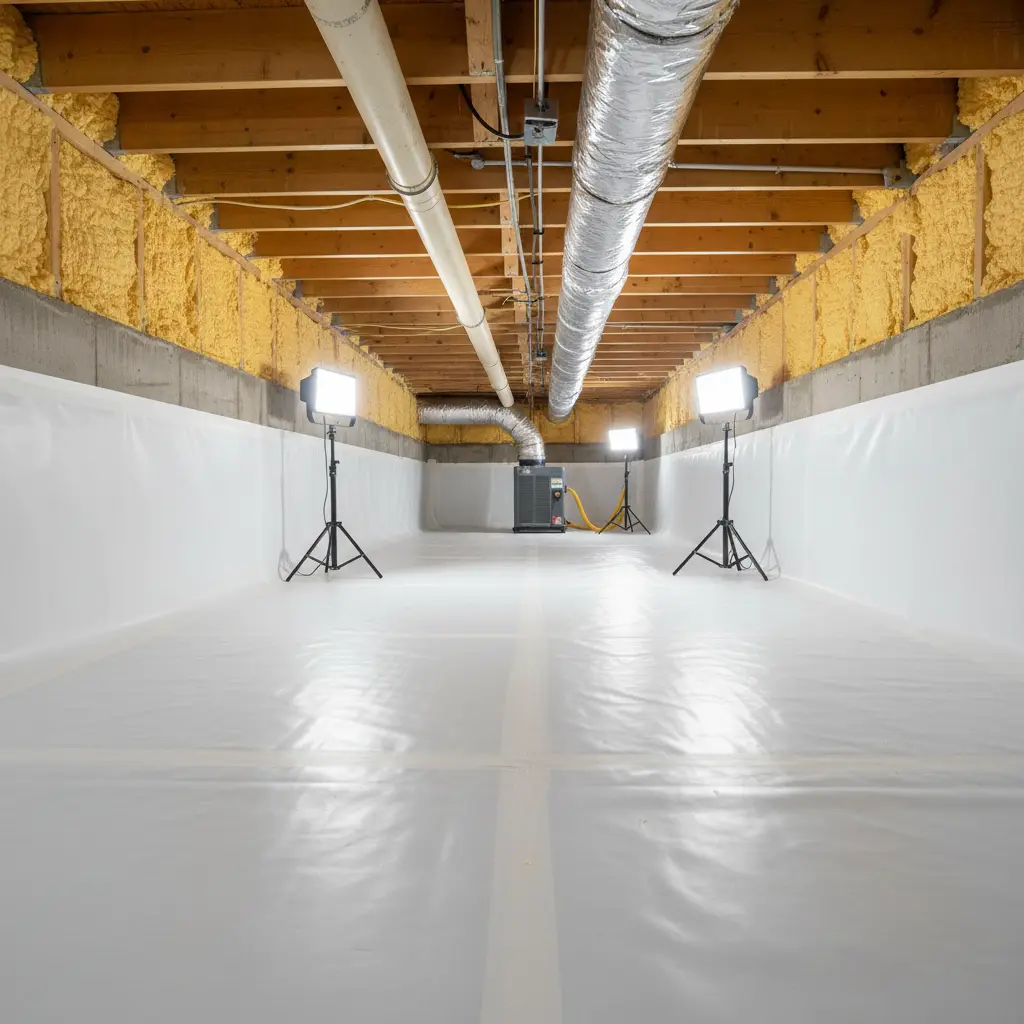
Crawl space encapsulation converts an open, vented crawl space into a sealed, conditioned environment. A heavy-duty vapor barrier is installed across the ground and up the foundation walls. Spray foam or rigid foam insulates the walls. A dehumidifier maintains dry air year-round. The result: no ground moisture, no condensation, no mold growth — and a noticeably warmer floor above.

In Maine's climate, vented crawl spaces trap cold winter air and humid summer air in equal measure. Warm, moist summer air that enters a vented crawl space hits cold surfaces and condenses — creating exactly the conditions mold needs to grow. Encapsulation eliminates that cycle entirely.

The insulation component of crawl space encapsulation qualifies for Efficiency Maine rebates when installed by a certified contractor. We handle all documentation and help you access every rebate available for your project.

Crawl space encapsulation with vapor barrier installed in a Maine home

What Happens in Your Crawl Space Affects Your Whole Home

Stack effect pulls air upward through your home continuously. Air from your crawl space — carrying moisture, mold spores, and odors — rises into your living space through gaps in the floor above. Research from the EPA suggests that 40 to 60 percent of the air on a home's first floor comes from the crawl space or basement.

If your crawl space has mold, musty odors, or persistent moisture, those conditions are not isolated to that space. They are actively affecting your indoor air quality upstairs. Encapsulation stops the source. If mold is already present, we assess and address it before the liner goes in — not after.

The Three Components of a Complete Crawl Space Encapsulation

Vapor Barrier Specifications

  • Minimum 20-mil reinforced polyethylene liner
  • Installed across floor and up foundation walls
  • Sealed around piers and all penetrations
  • Seams overlapped and taped
  • Mechanically fastened for long-term durability

Heavy-Duty Vapor Barrier

A minimum 20-mil reinforced polyethylene liner is installed across the crawl space floor and up the foundation walls, around piers, and sealed at all penetrations. This is commercial-grade material — not thin 6-mil plastic. Seams are overlapped and taped, then mechanically fastened for a complete ground moisture barrier rated for decades.

Wall Insulation Specifications

  • Closed-cell spray foam on interior foundation walls
  • R-6.5 per inch
  • Brings crawl space inside conditioned envelope
  • Protects pipes, ducts, and framing
  • Prevents freezing and condensation

Crawl Space Wall Insulation

Closed-cell spray foam is applied to the interior foundation walls, delivering R-6.5 per inch. This brings the crawl space inside your home's conditioned envelope, protecting pipes, ducts, and framing from freezing and condensation.

Learn About Spray Foam Insulation →

Dehumidification Specifications

  • Crawl space-rated dehumidifier
  • Condensate drain line installed
  • Controls moisture year-round
  • Not optional in Maine's climate
  • Works as complete system with vapor barrier

Crawl Space Dehumidification

A crawl space-rated dehumidifier with a condensate drain line is installed to control moisture year-round. This is not optional in Maine's climate — it works as a complete system with the vapor barrier to maintain dry, conditioned air in the crawl space.

Dehumidification Services →

Crawl Space Scenarios We Handle

New Encapsulation

Starting from scratch with a bare dirt crawl space. We install the full system — vapor barrier, wall insulation, and dehumidifier — typically in 1–2 days.

Get an Estimate →

Existing Liner Replacement

Old, damaged, or undersized plastic liner? We remove the existing material, assess for underlying damage, and install a proper commercial-grade vapor barrier system.

Get an Estimate →

Mold Present in Crawl Space

We assess and remediate mold before encapsulation — never trap the problem under a liner. Mold removal and encapsulation are coordinated as a single project.

Mold Removal and Remediation →

Dehumidifier Add-On

Already have a liner but no dehumidifier? We assess your current setup and install the proper crawl space-rated unit to complete the system.

Dehumidification Services →

How Our Crawl Space Encapsulation Process Works

1

Crawl Space Assessment

We inspect the full crawl space: ground moisture, standing water, existing liner condition, mold or rot on joists, pest activity, and drainage. This tells us exactly what needs to happen before and during encapsulation.

2

Pre-Treatment If Needed

If mold is present, we remediate it before any encapsulation work begins. Standing water and drainage issues are flagged and addressed so the system performs as intended.

3

Encapsulation Installation

The vapor barrier is installed across the floor and up the foundation walls. Seams are overlapped, taped, and mechanically fastened. Spray foam is applied to the walls. A dehumidifier is installed with a condensate drain line.

4

Documentation and Rebate Support

We provide photos, R-value documentation, and handle your Efficiency Maine rebate application so you receive every rebate available for your project.

Learn About Efficiency Maine Rebates

Common Questions About Crawl Space Encapsulation

Crawl space encapsulation is the process of sealing a crawl space with a heavy-duty vapor barrier, insulating the walls with spray foam, and controlling humidity with a crawl space dehumidifier. The result is a dry, conditioned environment that prevents moisture intrusion, mold growth, and energy loss.

Crawl space encapsulation typically costs $4,000 to $10,000 in Maine, depending on the size of the crawl space, its current condition, and the scope of work required. Efficiency Maine rebates may offset part of the cost for the insulation component. Contact us for a specific quote.

Yes — a dehumidifier is strongly recommended and effectively required in Maine's climate. The vapor barrier stops ground moisture, but a dehumidifier controls ambient humidity year-round to prevent condensation and mold growth. Without one, the encapsulation system is incomplete.

Yes. Crawl space encapsulation stops the source of mold growth by eliminating the moisture conditions that cause it. If mold is already present, it should be remediated before the vapor barrier is installed — not after. We assess for mold on every crawl space project and coordinate remediation and encapsulation as a single project when needed.

Mold Removal and Remediation →

The insulation component of crawl space encapsulation qualifies for Efficiency Maine rebates when it meets R-value thresholds and is installed by a certified contractor. Mattra is an Efficiency Maine certified contractor and handles all rebate documentation for our customers.

Financing & Rebates Details →

Why Maine Homeowners Choose Mattra for Crawl Space Encapsulation

Dealing with mold, standing water, or pest damage? We assess and address before the liner goes in.

  • Efficiency Maine Certified
  • BPI-Certified Building Analysts
  • Mold Assessment Included
  • Commercial-Grade 20-Mil Vapor Barrier
  • Licensed & Insured
  • Free Crawl Space Assessments
  • Rebate Documentation Handled

Ready to Fix Your Crawl Space for Good?

Our team provides free in-home crawl space assessments across Maine. We inspect conditions, explain what we find, and give you a clear estimate for the right solution. No pressure and no guesswork.

Mattra Inc. · 68 Whipple St, Lewiston ME 04240
(207) 777-6020 · info@mattrainc.com

Questions? Call (207) 777-6020 or email info@mattrainc.com