Mattra helps Lewiston-Auburn homeowners repair wood rot caused by moisture, mold, leaks, and hidden structural damage.
Wood rot rarely starts as a simple surface problem. In many homes, rotted wood is tied to leaks, crawl space moisture, hidden humidity, poor drainage, or damage that has been building behind walls or under floors for a long time. Sometimes it is discovered during mold work. Sometimes it shows up when a subfloor feels soft, trim starts crumbling, or framing looks darker and weaker than it should.
That is why rot repair needs more than a patch. Mattra helps homeowners figure out whether the issue is cosmetic, structural, moisture-related, mold-related, or part of a larger repair and rebuild project. Start with the Diagnostic Form to explain what you are seeing and get clearer direction on the right next step.
Clear guidance, practical next steps, no pressure
Wood rot happens when moisture stays in contact with wood long enough for deterioration to begin. The wood may look stained, soft, cracked, swollen, or crumbly, but the visible damage is often only part of the problem.
Common causes of wood rot in a home include:
In many cases, wood rot from water damage is a sign that the home has an ongoing moisture issue that needs to be addressed along with the repair itself.
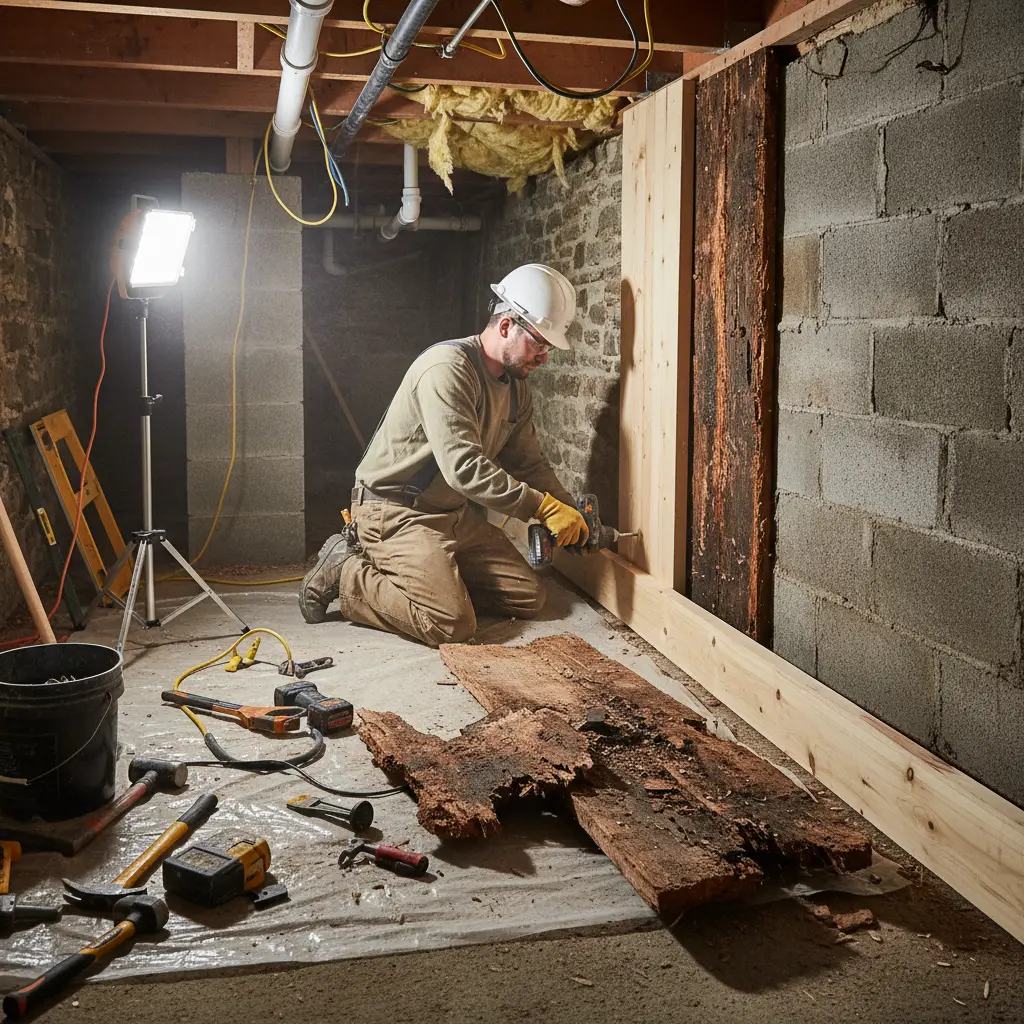
Some wood damage is limited to trim or non-structural materials. Other cases affect framing, joists, subfloors, sill plates, or other areas that support the home. That is where structural wood rot repair becomes more important.
When the floor feels soft, bouncy, or unsafe, the damage may already be affecting structural support.
If framing looks deteriorated, misshapen, or fragile, repair needs to go beyond surface replacement.
When wood has lost firmness, shape, or load-bearing ability, replacement and structural review become more important.
If leaks, mold, or trapped humidity are still present, the repair plan needs to address the cause along with the damage.
If the repair may involve exposing structural areas, the project often fits better within a broader repair and rebuild plan.
If the issue involves structural wood damage, rotted subfloor repair, or framing repair after moisture damage, the goal is not just to replace bad material. It is to understand what caused the failure and keep it from coming back.
Mattra reviews the damaged area, what is visible now, and what may be causing the problem behind the surface.
The issue is evaluated to determine whether it is structural, cosmetic, or part of a larger repair and rebuild project.
Damaged wood is repaired, reinforced, or rebuilt where needed based on the condition and structural role of the material.
When appropriate, the plan connects rot repair to moisture control, mold removal, waterproofing, or other related next steps.
If the project expands beyond the original discovery, Mattra helps clarify what should happen next so the repair holds up long term.
Wood rot is often part of a bigger story. If moisture has been trapped long enough to damage wood, there may also be mold growth, damp insulation, or hidden contamination nearby.
That is why Mattra takes a whole-home approach. We do not treat rot like an isolated carpentry issue when the real problem may involve water intrusion, crawl space conditions, or air movement that keeps areas damp.
Related next steps may include:
When rot is discovered during mold-related work, or when mold is found around rotted framing, dealing with both the damage and the source creates a stronger long-term result.
If rot is part of a broader home issue, these related services can help support the full solution.
If rot is connected to mold, damp materials, or contamination, explore mold removal and remediation for a cleaner and safer next step.
Removal & Remediation →If water intrusion or below-grade moisture is contributing to the damage, learn more about basement waterproofing to help protect the structure.
Basement Waterproofing →If the scope involves opening walls, reframing, or larger repairs, see construction and repair services for coordinated project support.
Construction →If damaged areas need to be removed and rebuilt correctly, review repair and rebuild options for a clearer path forward.
Repair & Rebuild →Wood rot is usually caused by long-term moisture exposure. Common sources include leaks, crawl space humidity, poor drainage, water intrusion, and damp conditions that never fully dry out.
Wood rot becomes structural when it affects framing, joists, subfloors, supports, or other parts of the home that carry weight or affect stability.
Yes, but crawl space rot should be evaluated carefully because the damage is often tied to long-term moisture and may affect nearby structural materials too.
Often, yes. Rot and mold are both common results of chronic moisture, leaks, or damp building conditions. One problem often points to the other.
That depends on the extent of the damage and whether the wood has lost structural strength. Minor deterioration may be more limited, but hidden wood damage often requires repair and rebuild work.
The damaged wood needs to be repaired, but the moisture source also needs to be addressed. That may involve fixing leaks, improving drainage, reducing humidity, or correcting nearby mold and waterproofing issues.
Mattra does not treat rot as an isolated carpentry job. We look at the full picture, including moisture sources, mold risk, structural condition, and what it takes to keep the problem from returning.
If you are already dealing with mold or moisture alongside your rot concerns, it is important to address all related issues together for a lasting repair.
If you have found rotted wood in a crawl space, subfloor, framing area, or another part of the home, it is worth getting a closer look before the damage spreads further. Mattra helps Lewiston-Auburn homeowners understand the cause, repair the damage, and plan the right next step when moisture, mold, or hidden structural issues are involved.
Practical repairs, clearer answers, and a whole-home approach to preventing the problem from coming back.
Mattra Inc. · 68 Whipple St, Lewiston ME 04240
(207) 777-6020 ·
info@mattrainc.com
Questions? Call (207) 777-6020 or email info@mattrainc.com