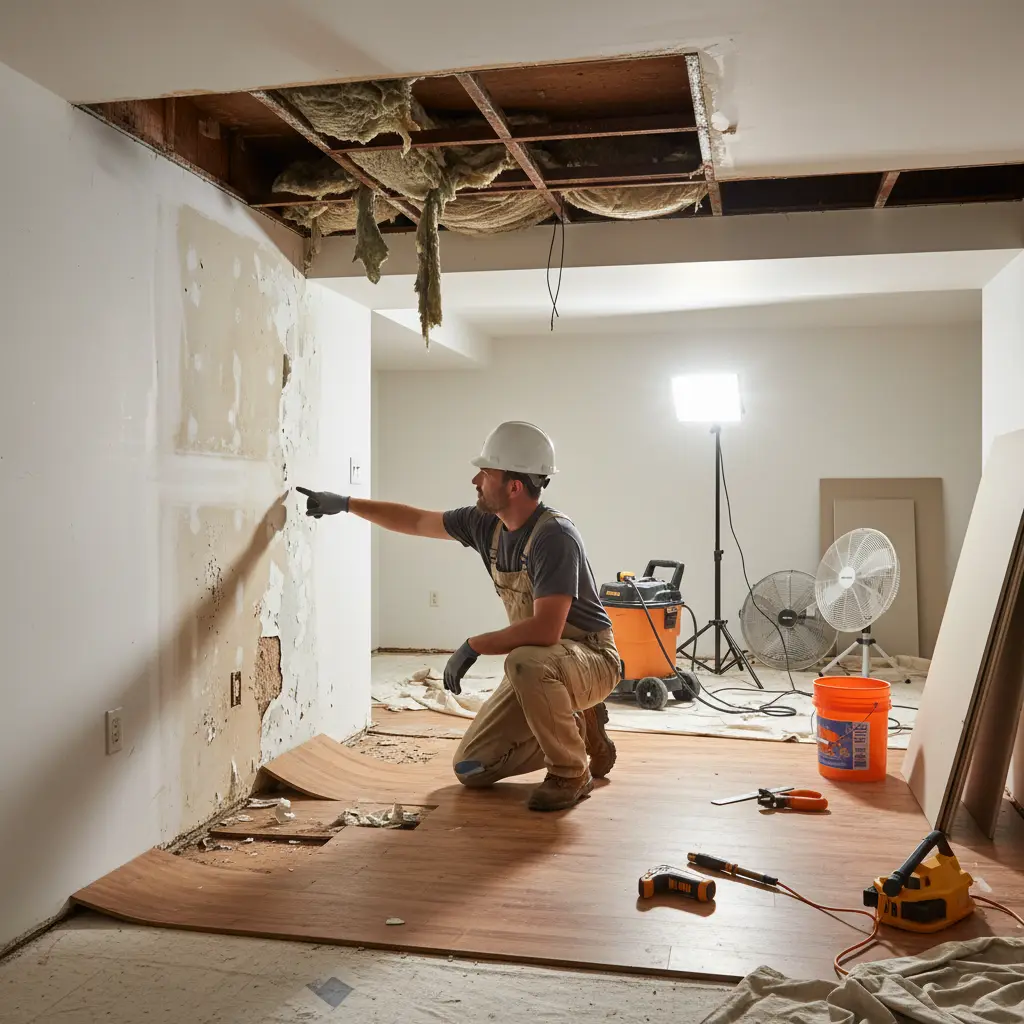
When the emergency cleanup is done, Mattra helps Lewiston-Auburn homeowners repair the damage, rebuild affected areas, and plan the right next step.
Water extraction and drying are only the first part of the process. Once the emergency crew leaves, many homeowners are still left with opened walls, damaged ceilings, wet flooring, compromised framing, or basement areas that do not feel fully restored.
That is where Mattra comes in. Mattra helps sort out what still needs attention after a leak, flood, or moisture event, including repair after water extraction, rebuild after water damage, and next steps when mold or moisture concerns may still be part of the picture.
Start with the Diagnostic Form to explain what was damaged, what has already been done, and what still needs repair.
Clear next steps · Practical guidance · No pressure
Most emergency companies focus on the urgent phase: stopping the water, removing standing moisture, and drying the area. That work matters, but it does not complete the project.
Once the fans are off and the drying equipment is gone, homeowners are often left asking:
This is the stage where water damage repair begins. Mattra helps Lewiston-Auburn homeowners move from mitigation into actual repair, reconstruction, and smarter next-step planning.

Water damage can affect much more than what was visibly wet. Even after drying is complete, the home may still need repairs to finishes, structural materials, and hidden areas that were compromised during the event.
Repair after leaks, stains, sagging drywall, or mitigation-related openings in ceiling assemblies.
Restoration for lower-level finishes, framing, and materials damaged during a flood or moisture event.
Replacement and rebuilding for walls opened during water extraction or affected by hidden moisture.
Repair for materials that swelled, buckled, softened, or had to be removed during mitigation.
Repair work when wood framing was weakened by moisture exposure and still needs restoration.
Reconstruction for areas opened up during the emergency phase so the home can be put back together correctly.
Whether the damage came from a burst pipe, roof leak, appliance failure, or flooding event, drying is only part of the answer. The damaged area still needs to be restored correctly.
Water damage does not always end when surfaces feel dry. In some homes, the bigger concern is what happened during the moisture event or what conditions remain afterward.
That can include:
That is why Mattra looks at more than the visible repair. If mold or ongoing moisture is part of the issue, it is important to deal with that too so the repair work lasts longer and the home is healthier.
A strong repair plan starts by understanding what caused the damage in the first place.
If the home still has moisture issues, those conditions need to be managed before final repairs are completed.
Water damage repair is stronger when it is paired with the right waterproofing, dehumidification, or moisture control strategy.
The repaired area should not just look better. It should be less vulnerable to the same problem happening again.
Depending on the situation, water damage repair may connect to:
This is where Mattra's approach makes a difference. The work is not treated like an isolated patch job. It is treated like part of a bigger home performance and reconstruction decision.
If the water event led to mold growth or contamination concerns, explore mold removal and remediation for a cleaner next step.
Mold Remediation →If water intrusion in the basement is part of the bigger problem, learn more about basement waterproofing to help protect the repaired area.
Basement Waterproofing →If the project involves larger structural repairs or reconstruction planning, review construction services.
Construction →If damaged materials need to be removed and rebuilt correctly, explore repair and rebuild options.
Repair & Rebuild →After mitigation, many homes still need repairs to ceilings, walls, floors, framing, or other areas affected by the water event. Drying is the first phase. Repair and rebuild come next.
That is typically part of the reconstruction phase, not the emergency response phase. Mattra handles the repair work that remains after cleanup and drying are complete.
Yes. Basement flooding repair may include damaged walls, flooring, framing, finishes, and moisture-related corrections that help protect the space long term.
If materials stayed wet too long, if there is a musty smell, or if the area had repeated moisture exposure, mold may also be part of the issue. That is worth evaluating before final repairs are completed.
No. Drying helps stabilize the space, but it does not restore removed materials, repair damaged finishes, or correct the cause of the water event.
Yes. Mattra helps homeowners move from post-emergency cleanup into practical repair, rebuild, and next-step planning.
Mattra helps Lewiston-Auburn homeowners move from post-emergency cleanup into practical repair, rebuild, and next-step planning with a whole-home approach.
If the emergency company has left and your home still needs repairs, Mattra can help you move into the next phase with more clarity. From ceiling water damage repair to basement flooding repair and broader rebuild after water damage, Mattra helps Lewiston-Auburn homeowners restore damaged areas and address the bigger moisture issues that may still be part of the problem.
Practical repairs, clear next steps, and a whole-home approach after the emergency phase is over.
Mattra Inc. · 68 Whipple St, Lewiston ME 04240
(207) 777-6020 ·
info@mattrainc.com
Questions? Call (207) 777-6020 or email info@mattrainc.com