Insulation Contractors in Maine for Energy-Efficient Homes

Most insulation companies install material. Mattra finds why your home is losing heat first — air leaks, ventilation gaps, insulation failures — and fixes the whole system. The result is a warmer, drier, more efficient home, often with Efficiency Maine rebates covering 40% to 80% of the project, up to $8,000.

Efficiency Maine Registered Vendor BPI Certified IICRC Certified Over 30 Years in Maine

Most Insulation Companies Install. We Diagnose First.

If you're searching for insulation in Maine, you've probably already gotten an estimate or two. Most contractors come in, look at the attic, measure the existing material, and quote a number. They install. They leave. Nine months later, your bills are still high — or different rooms are warm and others aren't — and you're not sure what went wrong.

The truth is that insulation by itself doesn't solve heat loss. Air movement does. Ventilation does. Moisture pathways do. A house that's losing heat is almost never losing it through one weak spot — it's losing it across an entire system, and adding insulation without diagnosing the air sealing problem is like wearing a sweater full of holes.

We're an Efficiency Maine Registered Vendor with over 30 years of building science experience in Maine homes. We diagnose the actual heat-loss pathways before we install a single piece of material. The free expert inspection identifies what's wrong. The diagnosis tells us what scope is justified. The work, when you do it, fixes the system — not just the symptom.

And when the right scope qualifies, Efficiency Maine insulation rebates can cover a meaningful portion of the cost — 40% to 80% depending on income, up to $8,000.

Free expert inspection. No diagnostic equipment fees. No pressure to commit.

Why Home Insulation Matters in Maine

Maine's heating season is long, and most homes were built when insulation standards were lower than they are today. Heat escapes through poorly insulated attics, leaky rim joists, uninsulated basement walls, and crawl spaces that breathe outdoor air. Each pathway is small on its own — together they add up to most of what's on your winter bill.
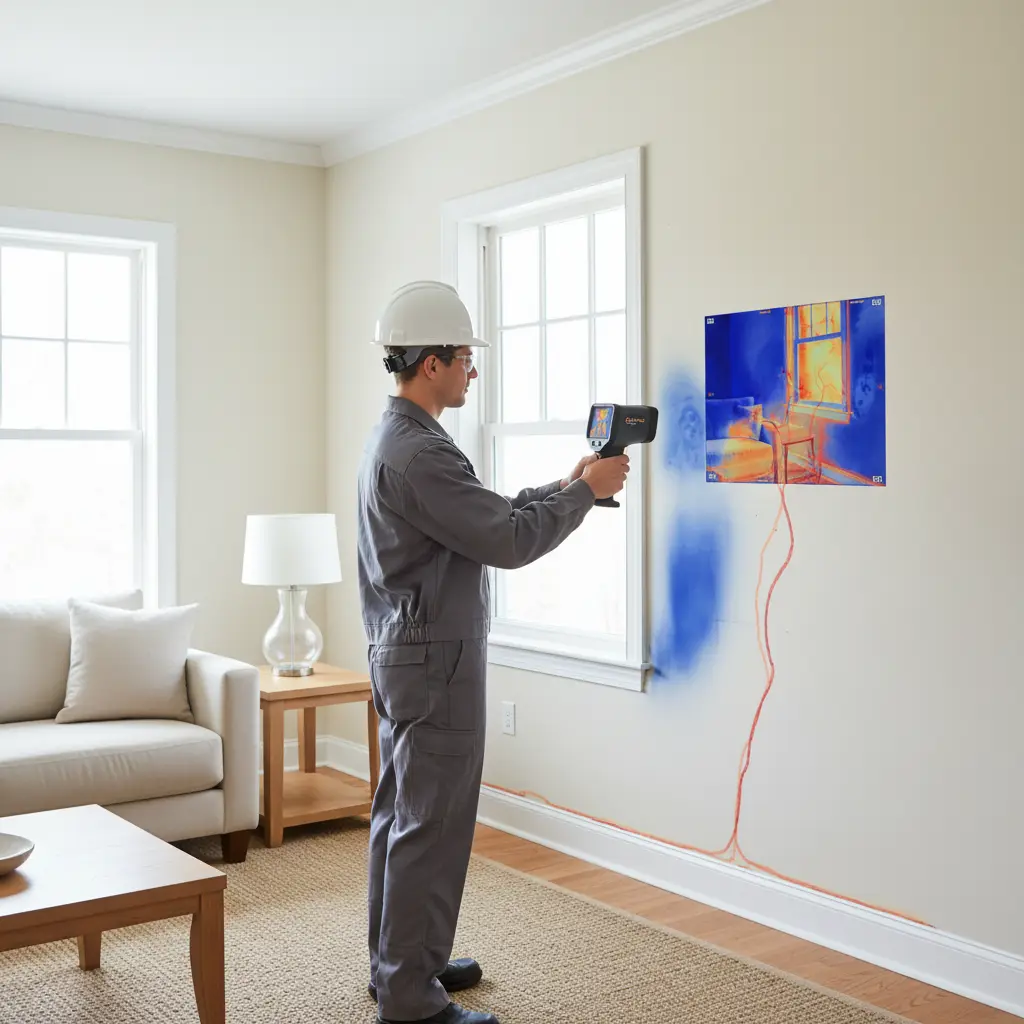
Thermal imaging showing heat loss pathways in a Maine home — attic, walls, rim joists

The signs are easy to recognize once you know what to look for:

  • Drafts in winter — usually point to air-sealing failures
  • Ice dams forming on the roof — attic insulation gaps and ventilation issues
  • Uneven temperatures between floors — envelope problems in different areas
  • Cold floors above basements — basement or crawl-space envelope problems
  • High heating bills — that don't match the size of the house

Each of those is a symptom of a different building-science problem. None of these are solved by adding more insulation in the wrong place. When insulation is installed correctly and combined with air sealing and ventilation corrections, homeowners typically see real winter comfort improvements and meaningful reductions in heating costs.

Find Your Situation

Most homeowners come to us at one of these moments. Find yours.

"My House Is Cold and My Heating Bills Are Outrageous"

You feel the cold spots. The thermostat says one number, the room feels like another. The oil or propane bill keeps climbing. You know something's wrong — you don't know what.

Free expert inspection

"I Heard About Efficiency Maine Rebates and Want to Know If I Qualify"

You've seen the rebate program mentioned. You've maybe even checked the website. You want to know what your home actually qualifies for, what scope of work makes sense, and how the rebate math comes out.

Rebate programs

"I Have Ice Dams Every Winter"

The icicles aren't pretty — they're a sign your attic insulation is letting heat escape, melting roof snow, and refreezing at the eaves. Eventually that water finds a way back into the house.

Attic insulation

"My Basement or Crawl Space Is Cold and Damp"

Cold floors above. Musty smell below. The space wasn't really built to be conditioned, and it shows. The rest of the house is paying for it.

Basement insulation

"An Insulation Company Already Came Out and It Didn't Work"

Someone added insulation. The house is still cold. You're skeptical of the next contractor and not sure who's giving you a real diagnosis vs. who's selling you the same product in a different bag.

Free expert inspection

"I'm Renovating or Building and Want to Get Insulation Right"

You're already opening walls. You want this done correctly while you have the chance — building science principles, not just code minimum, not just whatever the framer's leftover stack says.

Wall insulation

Not sure which fits? Start with a free expert inspection — we'll help you figure it out.

Insulation Services for Maine Homes

Different homes need different insulation strategies. Here's what we do, when each applies, and where to learn more.

Attic Insulation

Attics are the largest single source of heat loss in most Maine homes. Upgrading attic insulation reduces heating costs and helps prevent ice dam formation.

Learn More

Wall Insulation

Older Maine homes often have minimal or compressed insulation in exterior walls. Dense-pack cellulose or injection methods upgrade thermal performance without major renovation.

Learn More

Basement Insulation

Cold basement walls and rim joists let heat escape from the entire house above. Sealing and insulating the basement envelope improves comfort upstairs.

Learn More

Crawl Space Encapsulation

Open crawl spaces let outdoor air, moisture, and pests under your home. Encapsulation seals the envelope and stops the moisture cycle that causes mold and structural damage.

Learn More

Spray Foam Insulation

Closed-cell and open-cell spray foam in attics, walls, basements, and rim joists. The choice depends on the assembly and what the foam is doing — air seal, vapor barrier, or thermal control.

Learn More

Blown-In Insulation

Cellulose and fiberglass blown into attics, walls, and floors. Often the right choice for retrofitting existing structures without major renovation.

Learn More

Air sealing is the foundation of all of these — and is usually the highest-leverage place to start. Learn more about air sealing.

How We Insulate Maine Homes

Three steps. Diagnosis first. Material second. Verification last.

1

Free Expert Inspection

We assess insulation levels, look for air leakage points, identify moisture risks, and map where heat is actually escaping. The diagnosis tells us what scope is justified — not what's most profitable to install.

2

Air Sealing + Insulation Installation

Air sealing comes before insulation. Sealing the leak paths around framing, plumbing, electrical penetrations, and rim joists is what makes insulation work. Then we install the right material for the assembly — spray foam, blown-in cellulose, or whichever combination the inspection identified.

3

Verification + Rebate Documentation

We confirm the work performed to standard. For Efficiency Maine projects, we handle the rebate paperwork, including the HESP Energy Assessment Checklist required for insulation rebate claims. You get a documented project — and a rebate without the headache.

Efficiency Maine Insulation Rebates

Maine homeowners qualify for Efficiency Maine insulation rebates through the Home Energy Savings Program. As a Registered Vendor, we handle the paperwork and ensure your project meets program requirements.

Maine homeowner reviewing Efficiency Maine rebate documentation with a Mattra installer

Maximum insulation rebates by income tier

(% of project cost, capped at dollar maximum)

  • Any income — up to 40% of project cost, maximum $4,000. No income verification.
  • Moderate income — up to 60% of project cost, maximum $6,000. Income verification required.
  • Low income — up to 80% of project cost, maximum $8,000. Eligibility includes HEAP, MaineCare, TANF, SNAP recipients, and others.

The program also includes:

  • Energy Upgrade Bundle (energy assessment + basic air sealing) — required entry point before insulation rebates apply
  • Air sealing rebates within the broader weatherization scope
  • Lifetime limits — one rebate per area per property (one attic, one wall, one basement)

Eligibility Notes

Owner-occupied year-round residences in Maine. Insulation must meet program technical standards (R-values, foam fire protection, basement perimeter coverage). Programs and amounts change periodically. As an Efficiency Maine Registered Vendor, we walk you through what your project actually qualifies for — before any work begins.

Check My Rebate Eligibility Rebates Guide

What Maine Homeowners Actually Say About the Work

The reviews below come from real customers across central Maine — including projects where we revised invoices lower because materials came in under, came back to fix thin spots after the fact, or found and fixed work another company missed years before.

"Very pleased with project that Mattra completed at our home in Auburn. Everyone we dealt with from John on the front end to the crew that did the work, to the office was very helpful and professional. They handled my endless questions and even a few mid-project scope changes with ease. The quality of their work was outstanding and we noticed a big difference this winter."

Jay Braunscheidel · Auburn, Maine · ★★★★★ Google Review

"These guys came through the Efficiency Maine list and we are so glad we chose them. They assessed quickly and helped us shore up our insulation and air sealing. They handled most of the paperwork and they have a great crew who did a heck of a job cleaning up after they were done."

Catherine Sass · ★★★★★ Google Review

"Now that the cold weather has arrived we've been keeping the thermostat much lower because the house feels tighter and is no longer drafty. What a difference! The team was in contact with us throughout the process about dates and times and also to file the necessary paperwork to get the state rebate. The insulators who came were professional and tidy. The man who tested before and after the job was great, too."

Rose Lincoln · Bethel, Maine · ★★★★★ Google Review

"Mattra insulated the walls of my home. After they completed the work, I was concerned that they may have accidentally skipped a section of a wall. They came and did a quality control check with a thermal camera and sent a crew back to beef up the few areas that were a little thin in insulation. They even offered to fill in a thin section in my attic that a different company I hired a few years previously had missed, for no additional charge! I've worked with 3 different insulation companies over the past five years and Mattra stands out as the best!"

Julia Colvin · ★★★★★ Google Review

Insulation works best when paired with the rest of the building system. We coordinate across:

Helping Maine Homeowners Improve Comfort and Efficiency

Homeowners across Lewiston, Auburn, Bethel, and surrounding communities rely on experienced maine insulation contractors to reduce heating costs, eliminate drafts, and improve indoor air quality. Done correctly, insulation upgrades also help prevent the moisture conditions that lead to mold.

Mattra coordinates insulation work with air sealing, energy audits, and mold remediation when the building system requires it — under one team.

Common Questions About Insulation in Maine

The rebate is calculated as a percentage of project cost, capped at a dollar maximum. Any-income households get up to 40% / $4,000. Moderate-income households get up to 60% / $6,000. Low-income households get up to 80% / $8,000. The Energy Upgrade Bundle (energy assessment plus basic air sealing) is required as the entry point before insulation rebates apply.

Usually yes. The Energy Upgrade Bundle is the program's entry point. The exception is homes that have been previously weatherized through Efficiency Maine or a Community Action Agency. As a registered vendor, we walk you through which step applies to your situation and handle the documentation.

Often no. Heat loss usually has multiple causes — air leaks, insulation gaps, ventilation issues, moisture pathways. Adding insulation without addressing the air-sealing problem is incomplete. That's why we diagnose before we install. The diagnosis tells us what scope of work is actually justified.

The choice depends on the assembly. Spray foam is right when air sealing and insulation need to happen in one product (rim joists, basement walls, certain roof decks). Blown-in cellulose or fiberglass is right when an attic just needs depth at a reasonable cost. We don't sell the most expensive option — we install what fits the building.

Yes. As a registered vendor, we complete and submit the required documentation, including the HESP Energy Assessment Checklist that must accompany insulation rebate claims. You get the rebate. We handle the paperwork.

We're based in Lewiston-Auburn and serve homeowners across Maine — including projects in Auburn, Bethel, Lisbon, Topsham, Brunswick, Monmouth, and the surrounding regions. Travel distance is rarely the limiting factor.

Find Out What Your Home Actually Needs

Most homeowners come into this thinking they need "more insulation." Some do. Some need air sealing first. Some need ventilation work. Some need none of the above and are spending money in the wrong place. The free expert inspection answers the question — without selling you anything you don't need.

No diagnostic equipment fees. No pressure to commit. Efficiency Maine rebate guidance included.

Mattra Inc. · 68 Whipple St · Lewiston, ME 04240
info@mattrainc.com