Air Sealing: Stop Drafts and Lower Your Energy Bills

Most Maine homes lose as much heat through air leaks as through their walls and attic combined. Air sealing your home’s envelope stops drafts, improves comfort, and makes every dollar of insulation work harder.

Efficiency Maine Certified BPI-Certified Building Analysts Blower Door Testing Available

Air Sealing Maine: Professional Home Envelope Sealing Service

Why Air Sealing Matters More Than Most Homeowners Realize

Insulation slows heat transfer. Air sealing stops it. The two work together, but most homes get insulation without addressing the air leaks underneath it first. The result: insulation that underperforms, heating bills that stay high, and rooms that feel drafty no matter how much you spend on heating.

Envelope air sealing means closing gaps, cracks, and penetrations in your home’s building envelope — the barrier between conditioned living space and unconditioned areas like the attic, basement, crawl space, and the outdoors. This is different from HVAC duct sealing, which addresses leaks in your heating and cooling distribution equipment. Both matter, but envelope air sealing is the foundation of an efficient, comfortable home.

Mattra includes air sealing on every insulation project. We also offer standalone air sealing service for homes that have existing insulation but have never had the leakage points addressed. Paired with Efficiency Maine rebates, it is one of the best investments a Maine homeowner can make.

Blower door testing during air sealing assessment in a Maine home

We Measure First, Then Seal

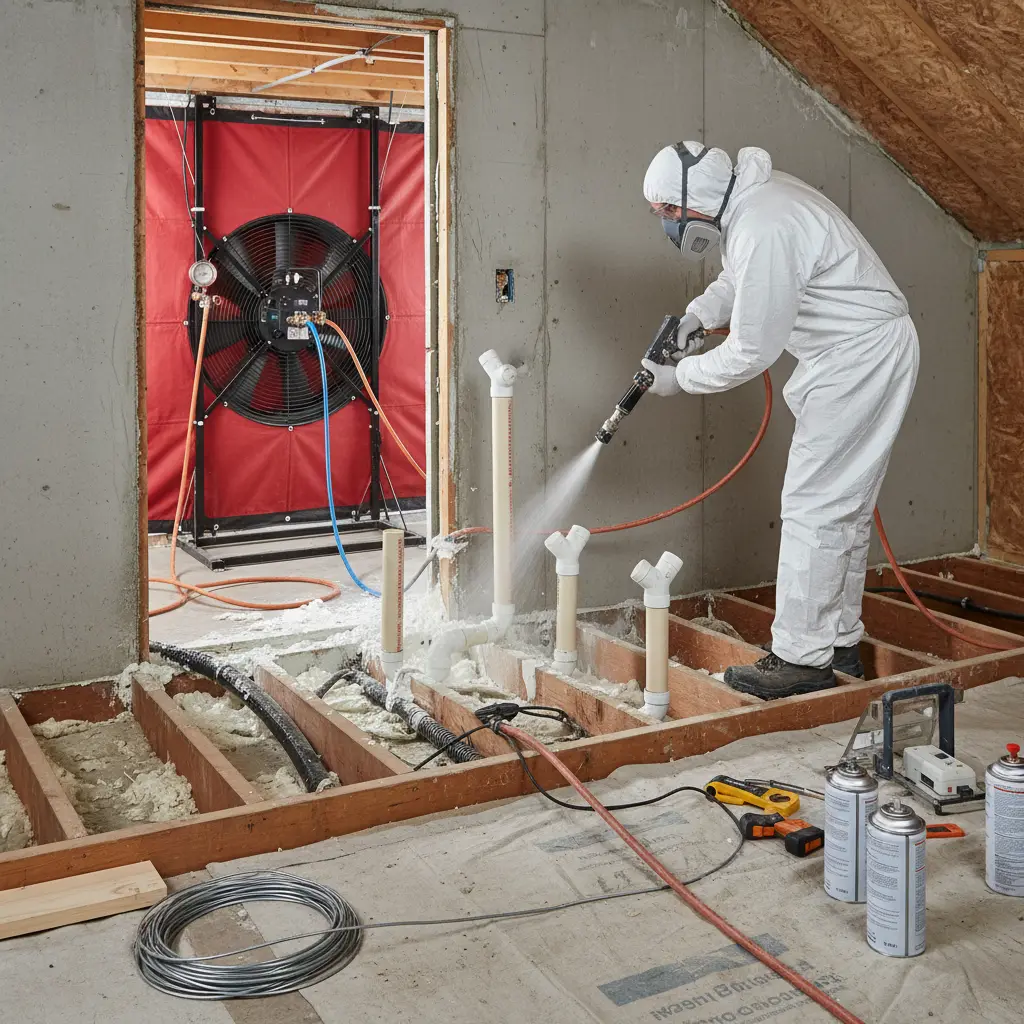
Before sealing, you need to know where the leaks are. Our team uses blower door testing to depressurize your home and identify exactly where conditioned air is escaping. This takes the guesswork out of air sealing and ensures every hour of labor goes toward the leaks that matter most.

Without measurement, air sealing is a guess. With blower door testing, it is a targeted improvement — and we can quantify the results afterward to document the improvement for your Efficiency Maine rebate application.

Where Air Leaks in Maine Homes

Attic Leak Details

  • Most air-leaky area in most homes
  • Gaps at top plates, recessed lights, plumbing stacks
  • Electrical wire penetrations and chimney chases
  • Attic hatches and knee wall doors
  • Sealing can reduce infiltration 30–50%

Attic Top Plates and Bypasses

The attic is the most air-leaky area in most homes. Warm air escapes through gaps at top plates, recessed lights, plumbing stacks, electrical wires, chimneys, and hatches. These bypasses are often invisible under existing insulation.

Sealing attic bypasses alone can reduce total home infiltration by 30–50%, making it the single most impactful air sealing target.

Attic Insulation →

Rim Joist Leak Details

  • Full of gaps and cracks at foundation sill
  • Cold air enters and flows into floor system
  • Closed-cell spray foam seals and insulates
  • Common source of cold floors above
  • Often combined with basement wall insulation

Rim Joist and Foundation Sill

The rim joist area where your home meets the foundation is full of gaps and cracks. Cold air enters here and flows into the floor system, causing cold floors and increasing heating costs.

Closed-cell spray foam is the most effective solution — it seals and insulates the rim joist in a single application.

Basement Insulation →

Basement & Crawl Space Leak Details

  • Pipes, wires, and HVAC ducts create direct air pathways
  • Structural members leave gaps at floor transitions
  • Fire-rated foam and caulk for code compliance
  • Often overlooked during initial construction
  • Contributes to moisture and comfort issues above

Basement and Crawl Space Penetrations

Pipes, wires, HVAC ducts, and structural members create direct air pathways between your basement or crawl space and living areas. These penetrations are sealed with fire-rated foam and caulk.

These leaks are often overlooked during original construction but contribute significantly to comfort and energy problems in the rooms above.

Crawl Space Insulation →

Window & Door Leak Details

  • Bigger leaks around frames, not through glass
  • Rough opening gaps behind trim
  • Interior trim caulk seals visible gaps
  • Exterior penetrations around utilities
  • Weatherstripping and threshold seals

Windows, Doors, and Exterior Openings

The biggest air leaks around windows and doors are not through the glass — they are through the framing gaps and rough openings behind the trim. These gaps allow conditioned air to escape directly into the wall cavity.

Interior trim caulk, exterior penetration sealing, and proper weatherstripping address these common leak points.

Interior Chase Leak Details

  • Open wall cavities act as chimneys
  • Dropped ceilings and interior soffits
  • Largest single source often missed
  • Visual-only inspection will not find these
  • Requires blower door test to identify

Interior Wall Top Plates and Chases

Open wall cavities, dropped ceilings, and interior soffits act as chimneys — channeling warm air from your living space directly into the attic. These are often the largest single source of air leakage in a home.

Interior chases are almost always missed by visual-only inspection. A blower door test is the only reliable way to identify and prioritize these hidden leak points.

What a Mattra Air Sealing Project Includes

Blower Door Pre-Test

Baseline air leakage measurement (ACH50) to quantify how much air your home is losing before any sealing work begins. This establishes a benchmark for measuring improvement.

Blower Door Testing →

Targeted Sealing

Seal all bypass locations using spray foam, caulk, rigid blocking, and fire-rated products. Every identified leak point is addressed systematically from attic to basement.

Post-Test Verification

A second blower door test confirms the improvement. You receive before-and-after numbers in writing so you can see exactly how much your home’s air leakage was reduced.

Rebate Documentation

Air sealing qualifies for Efficiency Maine rebates. We handle all the paperwork, documentation, and submission so you get the maximum rebate available for your project.

Financing & Rebates →

How Our Air Sealing Process Works

1

Free Assessment

We visit your home, perform a visual inspection, and discuss your comfort and energy goals. Many homeowners combine this visit with a blower door test to get objective data right away.

2

Blower Door Testing

We depressurize your home and use smoke pencils and thermal imaging to identify specific leak locations. This tells us exactly where conditioned air is escaping and allows us to prioritize the highest-impact sealing work.

3

Air Sealing

Our team works systematically through the entire building envelope: attic bypasses, basement penetrations, rim joist, interior chases, and all identified leak points. Most air sealing projects are completed in a single day.

4

Post-Test and Documentation

A second blower door test documents the before-and-after results. We record all sealed locations and prepare your Efficiency Maine rebate paperwork for submission.

Learn About Efficiency Maine Rebates

Common Questions About Air Sealing

Envelope air sealing means closing gaps, cracks, and penetrations in your home’s building envelope — the barrier between conditioned living space and unconditioned areas like the attic, basement, crawl space, and the outdoors. This is different from HVAC duct sealing, which addresses leaks in your heating and cooling distribution equipment. Both matter, but envelope air sealing is the foundation of an efficient, comfortable home.

Home air sealing in Maine typically costs $500–$2,500 depending on the size of the home, the number of leakage points, and whether blower door testing is included. Efficiency Maine rebates can offset a significant portion of the cost. Contact us for a specific estimate based on your home.

Air sealing should always come first. Installing insulation over unsealed bypasses is like insulating a sieve — the air leaks underneath allow conditioned air to escape regardless of the insulation above. Air sealing first ensures your insulation performs as intended. That’s why Mattra includes air sealing on every insulation project.

Common signs include drafty rooms, high heating bills, and noticeable temperature differences between rooms. A blower door test gives an objective measurement of your home’s air leakage rate (ACH50) and identifies exactly where conditioned air is escaping. Most Maine homes benefit significantly from air sealing.

Blower Door Testing →

Yes — air sealing qualifies for Efficiency Maine rebates when combined with insulation and performed by a certified contractor. Mattra is an Efficiency Maine certified contractor and handles all rebate documentation and submission for our customers.

Financing & Rebates Details →

Why Maine Homeowners Choose Mattra for Air Sealing

Air sealing is most effective as part of a complete home performance project. Combine air sealing with attic insulation, rim joist spray foam, or basement work in a single visit for the best results and the highest rebate potential.

  • Efficiency Maine Certified
  • BPI-Certified Building Analysts
  • Blower Door Testing Available
  • Licensed & Insured
  • Free Assessments
  • Rebate Documentation Handled

Ready to Stop Your Home From Leaking Heat?

Our team provides free air sealing assessments across Maine. We identify where your home is losing conditioned air, explain what we recommend and why, and give you a clear estimate before any work begins. No pressure and no guesswork.

Mattra Inc. · 68 Whipple St, Lewiston ME 04240
(207) 777-6020 · info@mattrainc.com

Questions? Call (207) 777-6020 or email info@mattrainc.com