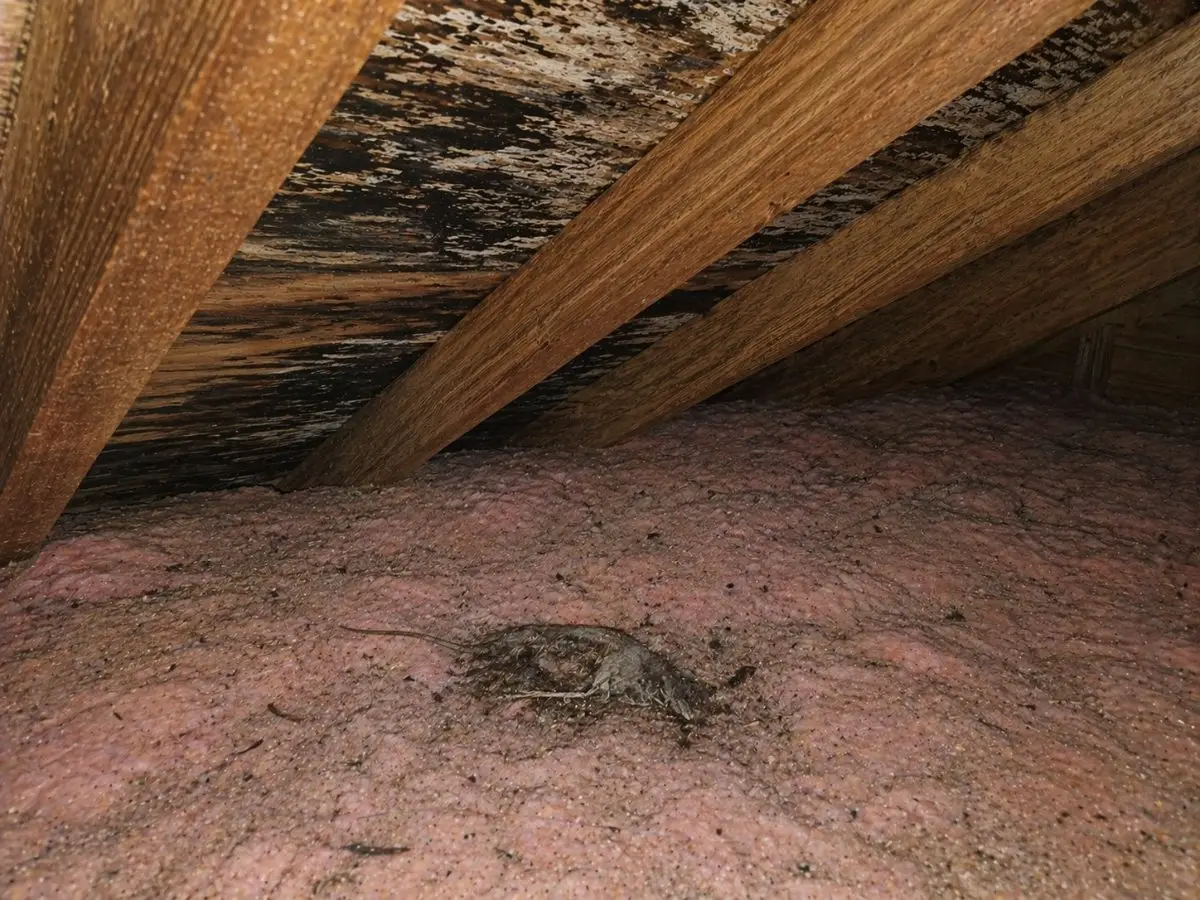
Most companies remove the mold and walk away. Mattra finds the moisture source, corrects it, and verifies the fix — so the same problem doesn't return six months later. Certified mold remediation for Maine homes, backed by over 30 years of building science.
You smelled it. You saw the spots. You called someone. They came in, sprayed something, charged you, and left. A few months later — same spot, or a new one nearby. Now you're wondering whether you got taken, whether your home has bigger issues, or whether anyone in this industry actually knows what they're doing.
The truth is closer to the third. Mold companies are mostly trained to remove what's visible. Few of them are trained to find why it grew in the first place. So they remove what they can see, declare the job done, and the moisture source nobody investigated keeps doing exactly what it was already doing.
That's why mold comes back. Not because remediation doesn't work — because the underlying problem was never diagnosed.
We do this differently. Tell us what you're seeing or what you've already been through, and we'll come look — at the mold, at the moisture path, at the building system that's failing somewhere upstream. The inspection is free. The diagnosis is honest. The fix, if you decide to do one with us, addresses the cause.
Helpful guidance. Honest assessment. No pitch on the first visit.
Mold needs three things: moisture, organic material, and time. Maine gives all three away for free.
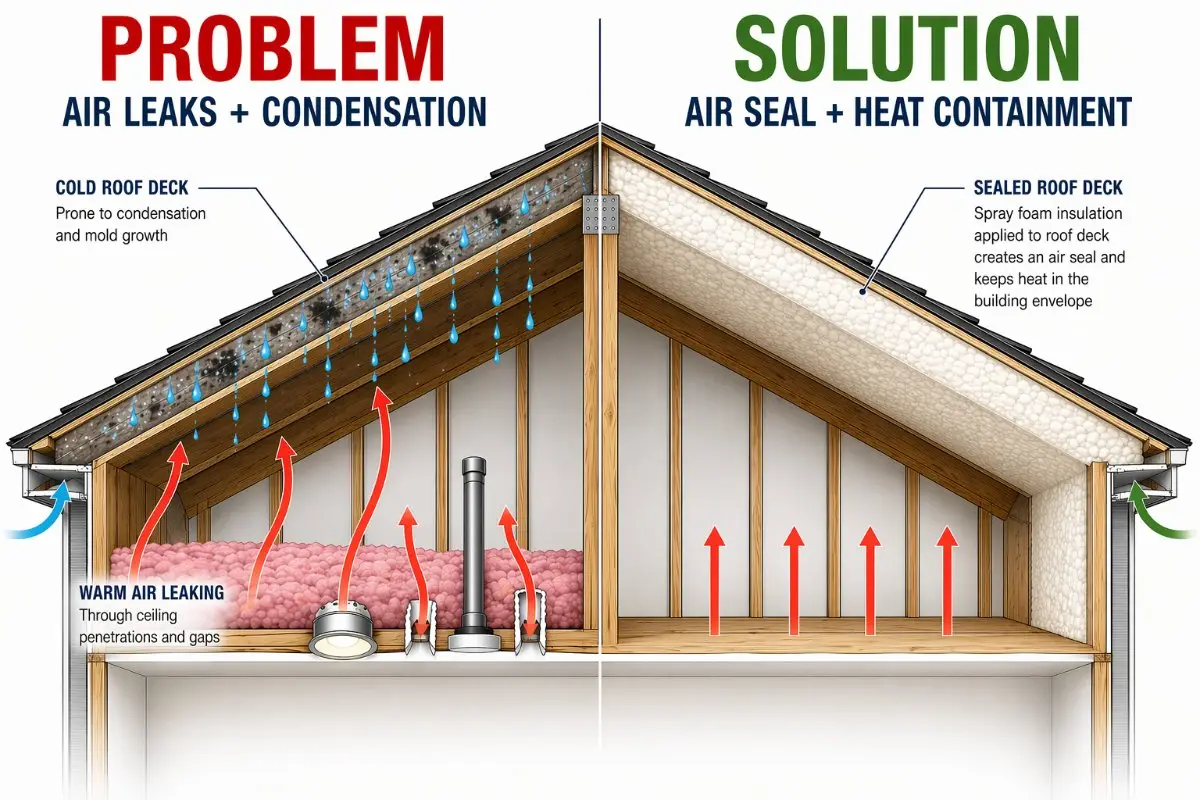
Long winters drive warm indoor air toward cold exterior walls and attics. Where that warm air meets a cold surface, it condenses into liquid water — sometimes inside the wall cavity where you'll never see it until the drywall is already stained. Ice dams trap meltwater under shingles and into eaves. Basements and crawl spaces hold humidity year-round, especially when ventilation can't keep up. Older Maine homes are the worst case: insulation gaps, air leaks, and ventilation that was sized for a different era of building science.
Every one of those is a moisture problem first and a mold problem second. The mold is the symptom — the water is the disease.
Most contractors look at the symptom. We look at where the water is coming from, why it isn't getting out, and what part of the building is letting it in. Until that's diagnosed, the mold can't be permanently solved.
These are the conversations we have most. Each one routes to the right next step.
You smell it, see it, or got it flagged in an inspection. You have kids in the house, or someone in the family with allergies, asthma, or recurring symptoms. You want to know if this is dangerous before you do anything else.
Mold inspection & testing →You've been through this before. The spot you paid to clean is moldy again, or a new spot appeared nearby. You're skeptical of mold companies and not interested in another half-fix.
Removal & remediation →You're buying or selling and the inspection report flagged mold. The closing date isn't waiting. You need a fast, credible assessment that the lender, the buyer, and the agents will all accept.
Real estate transactions →The basement or crawl space smells off. You've looked and can't see anything. You're not sure if it's mold, just "old house," or something else entirely.
Mold inspection & testing →A pipe burst, a roof leaked, a basement flooded. The emergency company dried things out and left. You know mold can grow after water — you want to know if it's happening before it becomes a bigger problem.
Mold inspection & testing →You've gotten estimates and they don't agree on what's wrong, what to do, or what it costs. You want a fourth read from someone whose job is diagnosis, not selling you the most work.
Mold inspection & testing →Not sure which one fits? Start with a free expert inspection — we'll help you figure it out.
A real fix starts with a real diagnosis. Here's what working with Mattra looks like.
Tell us what's going on. Our expert inspector visits your home, looks at the visible mold, and — more importantly — looks at the moisture pathways, ventilation, and building details that explain why it's there. No diagnostic equipment fees. No pressure to commit to anything.
We explain what we found in plain language. Where the moisture is coming from. Why the mold grew. What needs to happen, in what order, and what each option costs. If a deeper diagnostic — like blower door testing or thermal imaging — is needed to confirm a suspected cause, we'll explain why and what that involves.
If you choose Mattra to do the work, we handle remediation to industry standards — containment, HEPA filtration, safe removal, antimicrobial treatment, post-remediation verification — plus we correct the moisture source so the same mold can't grow back. One coordinated team. No subcontractor handoffs.
A surprising amount of mold work in Maine isn't really mold work. It's air-sealing work. It's insulation work. It's ventilation work — with mold as the visible symptom that finally got someone's attention.
Warm, moist indoor air is constantly trying to escape into colder spaces — your attic in winter, your wall cavity, your rim joists in the basement. When that air can't escape (bad), or when it escapes and condenses on a cold surface (worse), it creates the exact conditions mold needs to grow. Add Maine's climate, and the cycle is hard to break unless someone fixes the building.
That's why our work often crosses trades. Remediation handles what's already there. Air sealing, insulation, and ventilation correction stop the conditions that grew it.
When the right next step points toward insulation or air sealing, Efficiency Maine rebates often cover 40% to 80% of the project cost depending on income, up to $8,000. As a registered Efficiency Maine vendor, we walk you through what you'd qualify for — and handle the paperwork. No pitch. Just the math, so you know it before you decide.
Related: Insulation · Air Sealing · Basement Insulation · Crawl Space · Energy Audit
Mold is uncomfortable to think about. The expensive part isn't the discomfort — it's the cost of solving it twice.
An honest diagnosis up front costs less than the second remediation that wasn't supposed to be necessary.
The mold remediation industry has a reputation for inflated estimates, fear-based selling, and disappearing once the check clears. We've built our reputation by doing the opposite.
A musty smell, visible spots, recurring allergy or respiratory symptoms in the home, or a recent water event are all signals worth a free expert inspection. Not every spot is dangerous — and we'll tell you when something can wait — but mold left to grow gets harder and more expensive to address. Earlier is almost always cheaper.
Cleaning removes what's visible. Remediation removes what's visible and corrects the conditions that grew it. Without the second step, the same mold typically returns. Industry-standard remediation also includes containment to prevent spore spread during work and post-remediation verification to confirm the area is clear.
"Black mold" is a popular term, not a scientific one — many mold species are dark-colored. Some species are more concerning than others, and the actual risk depends on the species, the size of the affected area, and who's living in the home. We can identify what's there and explain what it means for your situation. The mold glossary covers types in detail at /resources/mold-glossary/.
Over 30 years. Mattra Inc. was established in 1996 and has been serving Maine homeowners continuously since. We're IICRC certified for remediation and BPI certified for building science — the second matters because mold problems are almost always moisture problems first.
Yes. That's the work that distinguishes us from quick-fix mold companies. We diagnose where the moisture is coming from — air leakage, insulation failure, ventilation problem, water intrusion — and address it as part of the remediation scope. The mold can't grow back in the same spot if the conditions that grew it are gone.
Mold remediation itself isn't directly rebatable. But when the root cause is insulation or air sealing — which it often is — Efficiency Maine rebates can cover 40% to 80% of that part of the project depending on income, up to $8,000. We're a registered vendor and walk you through what qualifies.
The free expert inspection is the most useful first hour you can spend on this problem. Even if you don't end up working with us. Even if it turns out the mold isn't as serious as you feared. You'll leave with a real understanding of what your home is doing, why, and what your real options are.
No equipment fees. No diagnostic fees. No pressure to commit.