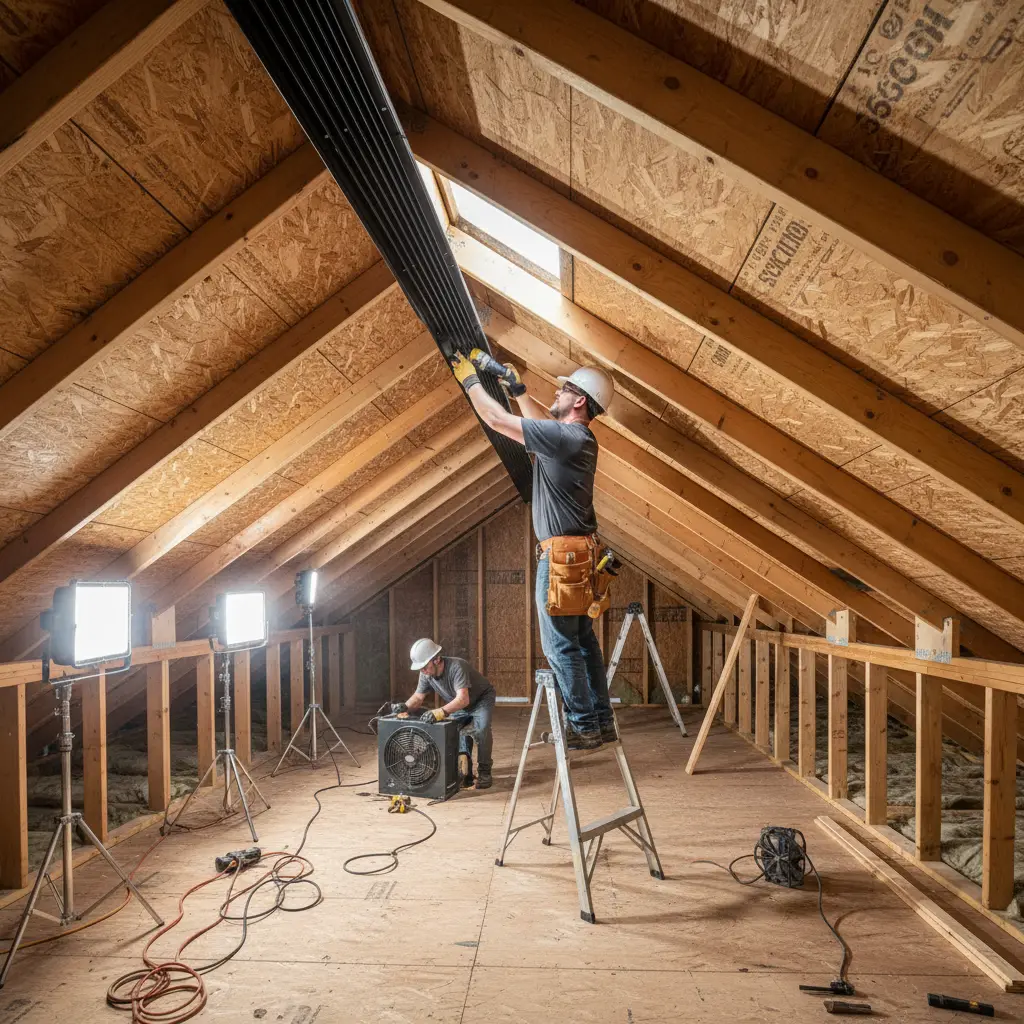
Attic Ventilation in Maine for Better Comfort, Moisture Control, and Roof Performance

Mattra helps Maine homeowners understand how attic ventilation and roof ventilation affect insulation, moisture control, comfort, and long-term roof performance.

Whole-Home Approach Clear Guidance No Pressure

Not Sure If Ventilation Is Part of the Problem?

Ventilation problems do not always look obvious at first. Sometimes the signs show up as hot upstairs rooms, attic heat buildup, musty smells, uneven temperatures, condensation, or insulation that does not seem to be performing the way it should. In other homes, roof wear, attic moisture, or lingering air quality issues point to a bigger ventilation problem.

That is why Mattra looks at ventilation as part of the whole-home system. If you are not sure whether the issue involves attic airflow, roof venting, insulation, or moisture control, the Diagnostic Form is a smart place to start. It helps connect the symptoms you are seeing to the right next step without guessing.

Clear guidance, practical next steps, no pressure

Attic ventilation airflow diagram showing heat and moisture movement through the roof assembly

Why Attic and Roof Ventilation Matter More Than Most Homeowners Realize

Attic ventilation is not just about moving air around. It plays an important role in how the home handles heat, moisture, roof stress, and energy performance.

When ventilation is working well, it helps:

  • Reduce attic heat buildup during warmer months
  • Limit moisture accumulation that can lead to condensation
  • Support healthier roof system performance
  • Protect insulation from trapped heat and damp conditions
  • Improve comfort in the rooms below

Roof ventilation matters because the attic is part of the larger building system. When the attic holds too much heat or moisture, the effects can show up in energy use, indoor comfort, roof life, and even air quality inside the home.

How Ventilation Affects Insulation, Roofing, and Whole-Home Efficiency

Ventilation and insulation work together. A well-insulated attic still depends on proper airflow, and a roof system still depends on balanced venting to help manage heat and moisture over time.

Insulation Performance

  • Poor ventilation can reduce attic insulation effectiveness
  • Trapped heat degrades insulation over time
  • Moisture buildup compromises R-value
  • Proper airflow supports long-term insulation performance

Insulation Performance

Poor ventilation can reduce how well attic insulation performs over time. Trapped heat and moisture degrade insulation materials, lowering R-value and reducing energy efficiency.

Attic Insulation →

Heat Near the Roof

  • Trapped heat stays near the roof assembly
  • Hot upper floors and uneven temperatures
  • Increased cooling costs in warmer months
  • Balanced airflow helps move heat out properly

Heat Near the Roof

When airflow is off, more heat can stay trapped near the roof assembly. This contributes to hot upper floors, higher cooling costs, and stress on the roofing materials themselves.

Moisture Movement

  • Ventilation affects how moisture moves through the attic
  • Dampness can linger without proper airflow
  • Condensation risk increases with poor venting
  • Moisture control protects materials and air quality

Moisture Movement

Ventilation affects how moisture moves through the attic and whether dampness lingers. Without proper airflow, condensation can build up and create conditions that damage materials and affect indoor air quality.

Roof Durability

  • Roofing materials wear differently with poor ventilation
  • Trapped heat can accelerate shingle deterioration
  • Balanced venting extends roof lifespan
  • Ventilation issues often show up as premature roof wear

Roof Durability

Roofing materials can wear differently when heat and moisture are not being managed well. Proper ventilation supports a longer-lasting roof system.

Roofing →

Home Efficiency

  • Unbalanced attic airflow affects energy performance
  • HVAC systems work harder with poor ventilation
  • Temperature swings become more pronounced
  • Ventilation improvements support whole-home efficiency

Home Efficiency

The home may handle temperature changes less efficiently when attic airflow is not balanced. Ventilation improvements can support better energy performance across the entire home.

That is why ventilation and insulation should not be treated as separate topics. If you are already looking at attic comfort or energy performance, it is smart to also review the connected systems.

Common Signs of Poor Attic Ventilation

Many homeowners do not realize ventilation is part of the issue until the symptoms become harder to ignore.

Hot Upper Floors

Rooms upstairs feel harder to cool or less comfortable than the rest of the home.

Attic Condensation

Visible moisture or dampness starts showing up in attic areas.

Musty Odors

Air coming from above feels stale, damp, or unpleasant.

Uneven Temperatures

One floor feels noticeably warmer or less balanced than another.

Moisture Staining

Staining or damp marks appear in attic areas or upper ceilings.

Premature Roof Wear

Roofing concerns may be tied to trapped heat and poor attic airflow.

Insulation Trouble

Insulation may underperform because of moisture or overheating.

General Airflow Issues

The home feels off, but the cause does not point to one obvious source.

These symptoms do not always mean ventilation is the only issue, but they are often a sign that attic airflow or roof ventilation deserves a closer look.

When a Professional Ventilation Assessment Makes Sense

1

Review the Symptoms

Start by looking at the actual issues showing up in the home, such as heat buildup, condensation, musty air, or insulation underperformance.

2

Check Connected Systems

A good assessment looks at how airflow connects to roofing, insulation, moisture, and broader building performance.

3

Clarify the Real Cause

The goal is to determine whether ventilation is the main issue or part of a larger home performance problem.

4

Choose a Smarter Next Step

Once the issue is clearer, it becomes easier to decide whether the next move involves ventilation changes, roofing work, insulation upgrades, or broader construction support.

Get a Ventilation Assessment

A ventilation assessment makes sense when:

  • Your attic feels too hot, damp, or unbalanced
  • You are seeing condensation, musty smells, or signs of moisture
  • Roofing problems may be connected to poor venting
  • Insulation is underperforming and you are not sure why
  • You are already planning roofing or attic work and want to make smarter decisions
  • The problem seems connected to a larger building performance issue

Mattra helps homeowners understand whether the concern is mostly about ventilation, or whether it also connects to roofing, insulation, crawl space conditions, or broader construction needs.

When Ventilation Problems Contribute to Moisture, Mold, or Air Quality Concerns

Poor airflow can make moisture problems worse, especially in attics and lower-level spaces where damp conditions can linger longer than expected.

Ventilation-related issues may contribute to:

  • Moisture in the attic that leads to staining or damp materials
  • Higher mold risk when humid air cannot escape properly
  • Air quality concerns tied to musty spaces
  • Crawl space airflow issues that affect lower-level moisture balance
  • Roof and attic conditions that stay damp longer than they should

This does not mean every attic or crawl space problem is a ventilation problem, but it does mean poor airflow can be part of the bigger picture. When moisture and ventilation overlap, it often makes sense to look at the home more holistically.

Moisture and airflow assessment in a Maine attic showing condensation and ventilation pathways

Related Services for Attic, Roofing, and Moisture Control

Ventilation rarely exists in isolation. Mattra connects attic ventilation concerns to the broader systems in your home, including insulation, roofing, crawl space conditions, and construction needs.

  • Attic Insulation — if comfort, efficiency, or attic heat are part of the concern
  • Roofing — if roof wear, leaks, or roof ventilation may be part of the issue
  • Crawl Space Encapsulation — if lower-level airflow and moisture are also affecting the home
  • Construction — if the problem connects to broader repair or project work

Common Questions About Attic Ventilation

Attic ventilation helps manage heat and moisture in the attic, which supports better roof performance, healthier insulation conditions, and more balanced comfort in the home.

Yes. Trapped heat and moisture can reduce insulation performance and contribute to conditions that make the attic less efficient overall.

Common signs include hot upper floors, attic condensation, musty odors, moisture staining, uneven temperatures, and roof-related wear that may be tied to trapped heat or dampness.

They can contribute to them. Poor attic airflow can allow moisture to build up, which may increase the risk of damp materials, musty air, and mold-related concerns over time.

Yes. Roofing and attic ventilation work together, so a roofing project is a smart time to look at how airflow may be affecting roof performance and attic conditions.

It makes sense when the problem involves real symptoms like heat buildup, moisture, comfort issues, insulation concerns, or roof performance questions that are not being solved by simple assumptions.

Get a Ventilation Assessment

If you think attic ventilation or roof ventilation may be part of a bigger comfort, moisture, or efficiency problem, Mattra can help you take a more informed next step. We connect ventilation concerns to the bigger picture, including insulation, roofing, crawl space conditions, and whole-home performance.

Practical guidance, clearer answers, and a better understanding of what your attic and roof system may be telling you.

Mattra Inc. · 68 Whipple St, Lewiston ME 04240
(207) 777-6020 · info@mattrainc.com

Questions? Call (207) 777-6020 or email info@mattrainc.com