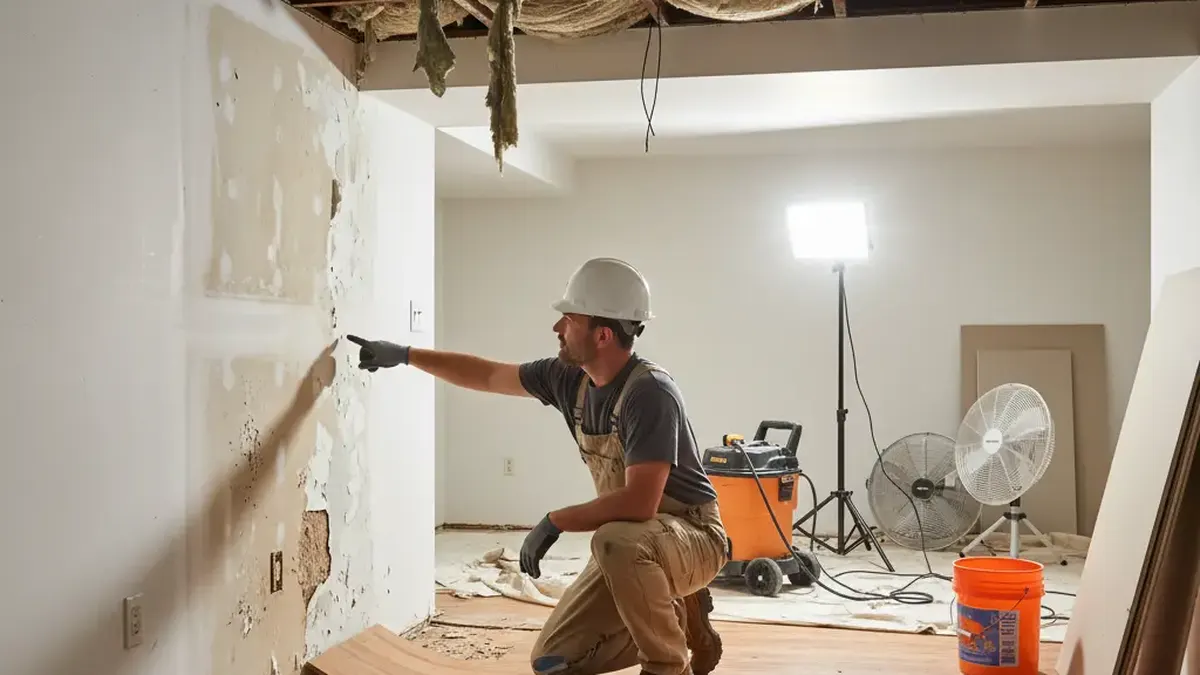
Every water damage job starts the same way: the standing water has to come out. Until it does, drying can't really begin, and the water keeps moving into places that are harder to reach, like wall cavities, subfloors, and the ceiling of the room below.
Water removal and extraction is the first step of full water damage restoration. Here's what happens during it, why the first day matters so much, and what you can do before help arrives.
Why the First 24 Hours Matter
Water doesn't sit still. It wicks up drywall, soaks into carpet pad and the subfloor under it, runs along framing, and drips through to the floor below. Every hour it sits, more material gets wet.
- Mold: the EPA recommends drying wet building materials within 24 to 48 hours to prevent mold growth.
- Swelling: particleboard, cabinet bases, and laminate swell and come apart. Hardwood cups.
- Spreading: water that reaches insulation and wall cavities is much slower to dry than water on a floor.
- Odor: wet carpet pad and drywall start to smell within a day or two.
Fast extraction means less tear-out, a shorter drying time, and a smaller bill.
Know What Kind of Water You Have
The restoration industry sorts water into three categories, and the category decides what can be saved and how carefully it's handled.
- Clean water (Category 1) comes from a supply line, a burst pipe, or an overflowing sink. Most materials can be dried in place if work starts quickly.
- Gray water (Category 2) comes from a washing machine, dishwasher, or sump overflow. It carries contaminants, so porous materials like carpet pad usually come out.
- Black water (Category 3) means sewage or outside floodwater. Anything porous it touched has to go, and the area needs cleaning and sanitizing.
Clean water doesn't stay clean. After a day or two of sitting in a warm house it picks up bacteria from the materials it soaks, and it starts to be treated like gray water. That's one more reason speed matters.
What Professional Water Extraction Involves
- Stop the source and make it safe. The water gets shut off, and power to wet areas is checked before anyone walks into them.
- Map the moisture. Moisture meters and thermal imaging show how far the water traveled, under flooring, behind baseboards, and into the room below. The visible puddle is usually the smallest part of it.
- Extract the standing water. Pumps and extraction equipment pull water out of floors and carpet far faster and more completely than mops and towels.
- Move the contents. Furniture and belongings go somewhere dry. Wood legs get blocked up off wet carpet so they don't stain.
- Remove what won't dry. Soaked carpet pad, wet insulation, and the bottom of saturated drywall usually come out so the structure behind them can dry. The goal is to keep everything that can be saved.
- Set up drying. Air movers and dehumidifiers go in right away. That's where structural drying takes over.
What You Can Do Before Help Arrives
- Shut off the water at the fixture or the main valve.
- Turn off power to wet rooms at the breaker if you can reach the panel without standing in water.
- Photograph every room before moving anything, for your insurance claim.
- Move rugs, electronics, papers, and anything valuable off the floor.
- Mop or wet-vac small amounts of clean water. Never use a household vacuum on a wet floor.
- Keep kids and pets away from any water that might be dirty, and wear gloves if you have to touch it.
What Can Usually Be Saved
Every job is different, but here's the general picture when work starts within a day or two:
- Drywall: often saved if it's clean water and caught early. If it's swollen, crumbling, or wet from dirty water, the bottom section comes out.
- Hardwood floors: can often be dried in place if drying starts fast. Badly cupped boards may need replacing.
- Carpet: sometimes saved after clean water. The pad underneath usually isn't.
- Insulation: soaked insulation usually has to be replaced.
- Cabinets: solid wood often survives. Particleboard bases usually swell and need replacing.
Common Questions About Water Removal
How long does water extraction take?
Pulling out the standing water usually takes hours, depending on how much there is and how many rooms it reached. The drying that follows takes days.
Can I just use a shop vac?
A wet-vac works for a small amount of clean water on a hard floor. It won't pull water out of carpet pad, subfloor, or wall cavities, and those are the places that cause mold later.
Is the water safe to touch?
Water from a clean supply line is generally safe at first. Water from a washing machine, a toilet, sewage, or outside flooding can carry bacteria. Wear gloves and boots and keep children and pets away.
Water Removal in Lewiston-Auburn and Across Maine
Mattra has worked on Maine homes since 1996. We remove the water, find where it went, dry the structure, check for mold, and rebuild, all as one job, and we work with your insurance company along the way. We're IICRC certified for water damage restoration.
Where did the water come from? Our guides cover frozen and burst pipes, flooded basements, and leaking water heaters and appliances.