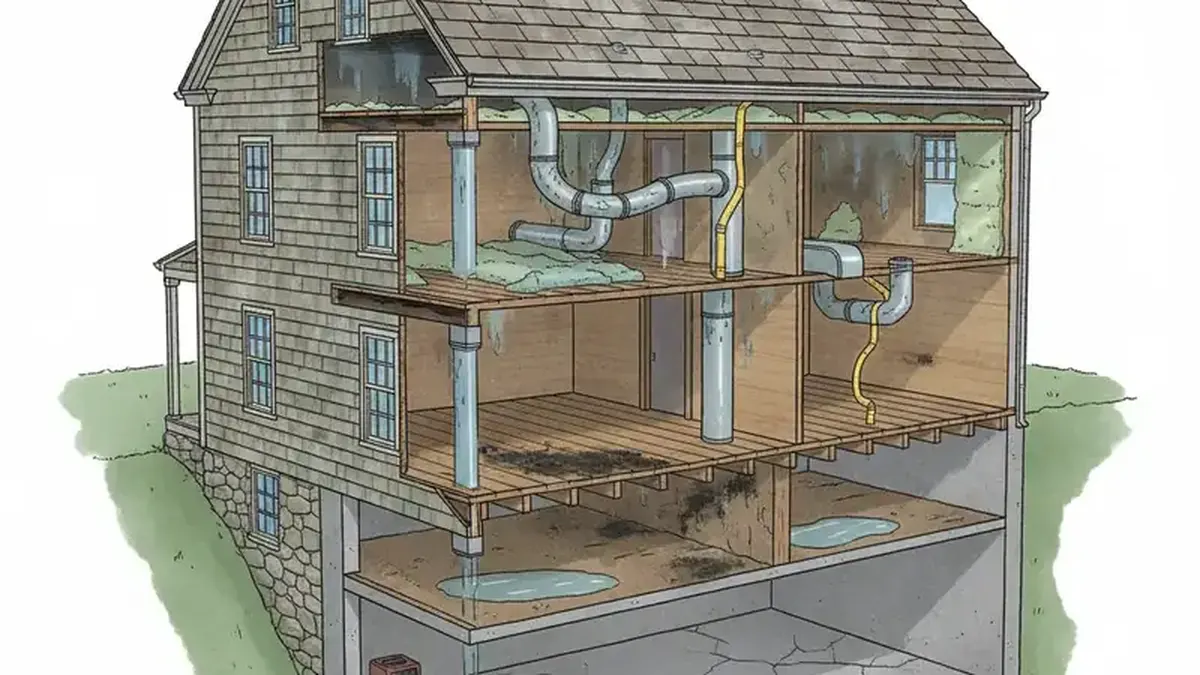
It usually happens on the coldest night of the year. A pipe in an outside wall, a crawl space, or an unheated corner of the basement freezes solid, and nobody knows until the temperature climbs and the water starts running. In a Maine winter, a split pipe can soak a ceiling, the walls below it, and the floor in the time it takes to find the shutoff.
This guide covers what to do in the first few minutes, how to thaw a frozen pipe before it bursts, and how to keep it from happening again. If water has already spread through the house, Mattra handles water damage restoration in Lewiston-Auburn and across Central and Southern Maine, from getting the water out to putting the rooms back together.
Why Pipes Burst When They Freeze
Water expands as it turns to ice. When a section of pipe freezes, the ice plug traps water between itself and the closed faucet downstream. Pressure builds in that trapped section until the pipe gives way, which is why a pipe often splits a few feet away from the spot that actually froze.
It also explains why the damage shows up late. While the pipe is frozen, the ice holds the water back. The flooding starts when it thaws, often on a sunny afternoon days after the cold snap that caused it.
The pipes most at risk in Maine homes:
- Supply lines in exterior walls, especially under kitchen and bathroom sinks on outside walls
- Pipes in crawl spaces, unheated basements, and attached garages
- Plumbing that runs through an attic or over a cantilevered floor
- Outdoor spigots and the short run of pipe just inside the wall behind them
- Any pipe sitting near an air leak, where outside air blows straight across it
That last one surprises people. A pipe inside a heated house can still freeze if cold air pours in through a gap at the sill plate or around a rim joist. In older Lewiston and Auburn homes, that draft is often the real cause, and the pipe just happened to be in its path.
A Pipe Just Burst: What to Do First
- Shut off the main water valve. In most Maine homes it's in the basement where the water line comes through the foundation wall, near the meter, or near the pressure tank if you're on a well. On a well, you can also switch off the breaker for the well pump.
- Cut power to wet areas. If water is near outlets, light fixtures, or the electrical panel, turn off those circuits at the breaker, but only if you can reach the panel without standing in water. If you can't, get out of the house and call the utility.
- Open the lowest faucet in the house to relieve pressure and drain what's left in the lines.
- Photograph everything before you move it. Wide shots of each room and close-ups of the damage. Your insurance company will ask for them.
- Get belongings out of the water. Rugs, furniture, electronics, and boxes, up and out of the wet area.
- Call your insurance company, then call for help. The sooner drying starts, the less has to be torn out.
Leave the water off until the pipe is repaired and the rest of the line has been checked. A second split nobody noticed will put you right back where you started.
How to Thaw a Frozen Pipe Safely
If you turn on a faucet on a bitter morning and get a trickle or nothing at all, a pipe is probably frozen. Catch it now and you may avoid the burst entirely.
- Open the faucet the frozen pipe feeds. Moving water helps melt the ice, and an open faucet gives the pressure somewhere to go.
- Warm the pipe gently, starting near the faucet and working back toward the frozen section. A hair dryer, a heating pad, or towels soaked in hot water all work. A space heater can warm a sink cabinet or a corner of the basement as long as it stays well clear of anything that can burn.
- Never use an open flame. A torch against a pipe inside a wall cavity is how a frozen pipe turns into a house fire.
- Keep the heat on it until full pressure comes back, then check every other faucet in the house. If one pipe froze, others in the same wall may have too.
If you can't find the frozen section, can't reach it, or the pipe is already bulging or cracked, shut off the main and call a plumber before it thaws on its own.
What a Burst Pipe Does to a House
Clean water from a supply line is the easiest kind of water damage to recover from, but it doesn't stay simple for long. Water runs along framing, soaks into the bottom of drywall, wicks into insulation, and settles under flooring where nobody can see it. A pipe that bursts in a second-floor bathroom can show up as a stain on the living room ceiling and a puddle in the basement.
The clock matters. The EPA recommends drying wet building materials within 24 to 48 hours to prevent mold growth. After that, drywall loses strength, wood floors cup and buckle, and wet insulation stops insulating. The longer the water sits, the more of the house ends up in a dumpster.
That's why the order of the work matters: getting the standing water out quickly, then drying the structure until moisture readings say it's dry, then checking for mold, then rebuilding. Skipping a step is how a house ends up with mold behind brand-new drywall.
Will Insurance Cover a Burst Pipe?
Most homeowners policies cover sudden and accidental water damage, and a pipe that freezes and bursts usually falls in that category. Insurers can push back if the house was left unheated or the damage built up slowly, so read your policy and call your agent early.
Mattra works with your insurance company on water damage claims. Keep the photos you took, write down when you found the leak and what you did about it, and save every receipt.
How to Keep Pipes From Freezing in a Maine Winter
- Keep the heat on. If you leave for a few days in January, set the thermostat no lower than 55 degrees.
- Open cabinet doors under sinks on exterior walls during a cold snap so warm room air reaches the pipes.
- Let a vulnerable faucet drip on the coldest nights. A slow drip keeps water moving and relieves pressure if ice does form.
- Shut off and drain outdoor spigots before the first hard freeze, and disconnect garden hoses.
- Insulate exposed pipes in crawl spaces, garages, and unheated basements.
- Seal the drafts. Air leaks at the rim joist, sill plate, and foundation are why many pipes freeze in the first place. Air sealing and basement insulation warm up the cold spot itself, and they often qualify for Efficiency Maine rebates.
If the same pipe has frozen twice, look for the cold air reaching it. Find that and fix it, and the pipe stops freezing.
Common Questions About Frozen and Burst Pipes
How do I know if a pipe is frozen?
No water, or only a trickle, from a faucet on a very cold day is the first sign. You may also see frost on an exposed pipe or a section that bulges. Check faucets on exterior walls first.
How fast does a burst pipe cause damage?
Right away. A split supply line can release a lot of water in minutes, which is why shutting off the main comes before anything else. Mold can start growing within 24 to 48 hours if the area isn't dried.
Can I dry the house myself after a burst pipe?
You can mop up and run fans, but fans mostly dry surfaces. Water trapped in wall cavities, under floors, and in insulation needs dehumidifiers, airflow aimed at the right places, and moisture readings to confirm it's gone before anything is closed up. Here is how long proper drying usually takes.
Burst Pipe Cleanup in Lewiston, Auburn, and Beyond
Mattra has worked on Maine homes since 1996. When a pipe bursts, we remove the water, dry the structure, check for mold, rebuild the water-damaged ceilings, walls, and floors, and fix the air leaks or missing insulation that let the pipe freeze. One team from the first call to the finished room, working with your insurance company along the way.
Winter leaks can come from above, too. See how ice dams cause ceiling water damage. For leaks that have nothing to do with the weather, read our guide to water heater and appliance leaks.